

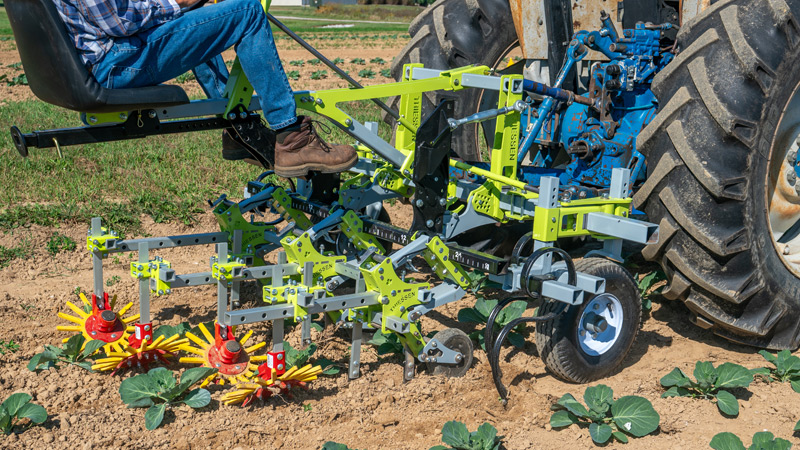
A Practical Guide for Growing Beyond Hand Tools
For many small and mid‑scale growers, hand tools are the foundation of weed management. They’re precise, affordable, and effective... until they aren’t. As acreage increases or labor becomes harder to find, hand cultivation quickly becomes a bottleneck. That’s often when growers begin exploring mechanical weed control.Transitioning to mechanical systems doesn’t mean abandoning everything you know. Instead, it means shifting your mindset to think in systems. Systems of row spacing, planting accuracy, timing, tool selection, and crop planning. Below are the foundational steps to help you make the transition smoothly and successfully.
1. Row Spacing
When you're relying on hand tools, it’s natural to plant intensively, tight rows, dense plantings, minimal space wasted. But mechanical cultivation requires more room for tools to pass through without damaging crops.- Key guidelines:
- Aim for 9 inches at minimum, and more ideally 12–20 inches between rows.
- Wider spacing allows tine weeders, basket weeders, finger weeders, and sweeps to operate safely and effectively.
- For growers where dense planting are required because of space limitations, they will have to use alternative weeding methods.
- Benefits to Wider Row Spacing:
- Mechanically plant, cultivation, and harvest, reducing labor costs
- Better airflow leads to reduced chance of mildew and blight
- Less crop competition can mean better yields
2. Plant Straight, Parallel Rows
Accurate planting is what makes precise cultivation possible. Without straight, parallel rows, cultivation tools can more easily damage the crop.- Ways to Mark Rows:
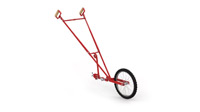
- Simple hand pull marker, or dibbler row marker
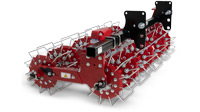
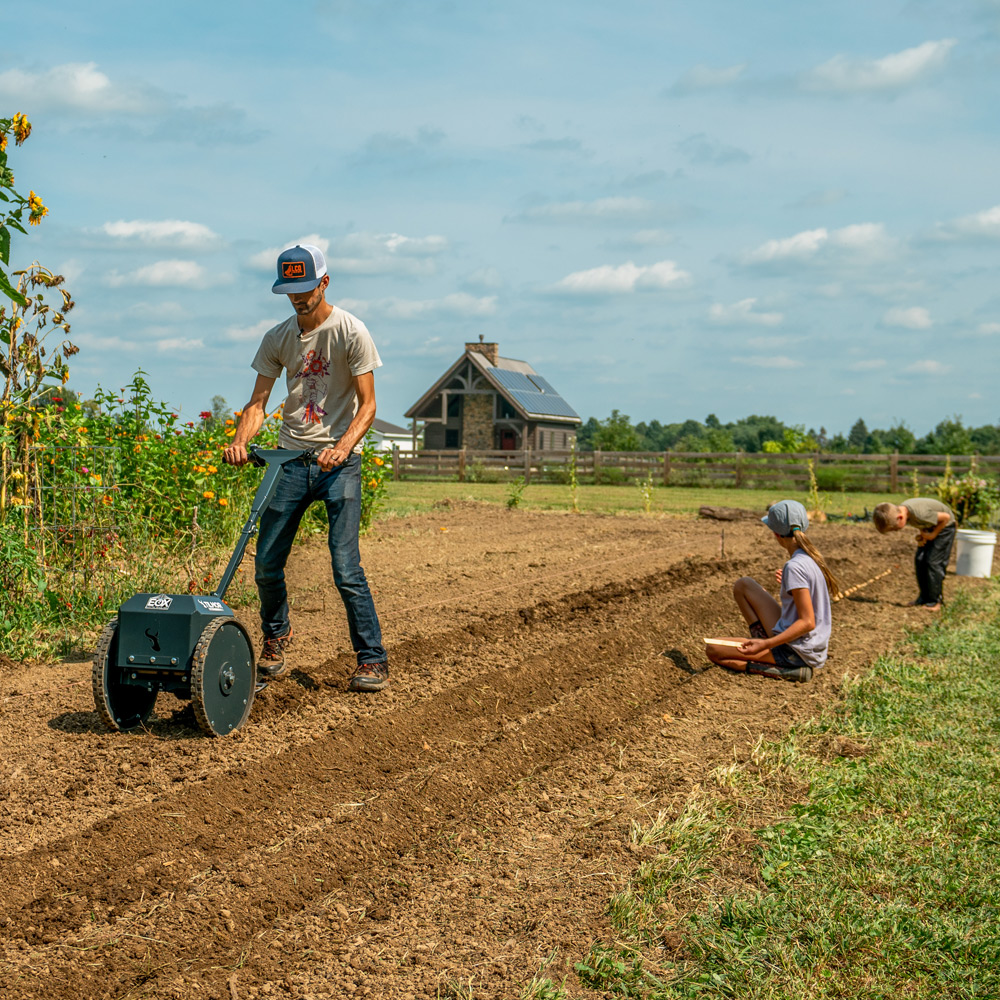
- Basket Weeder with or without mid-mount toolbar and shanks
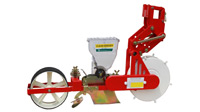
- Use toolbar mounted planters
3. Design Your Layout Around Odd-Numbered Rows
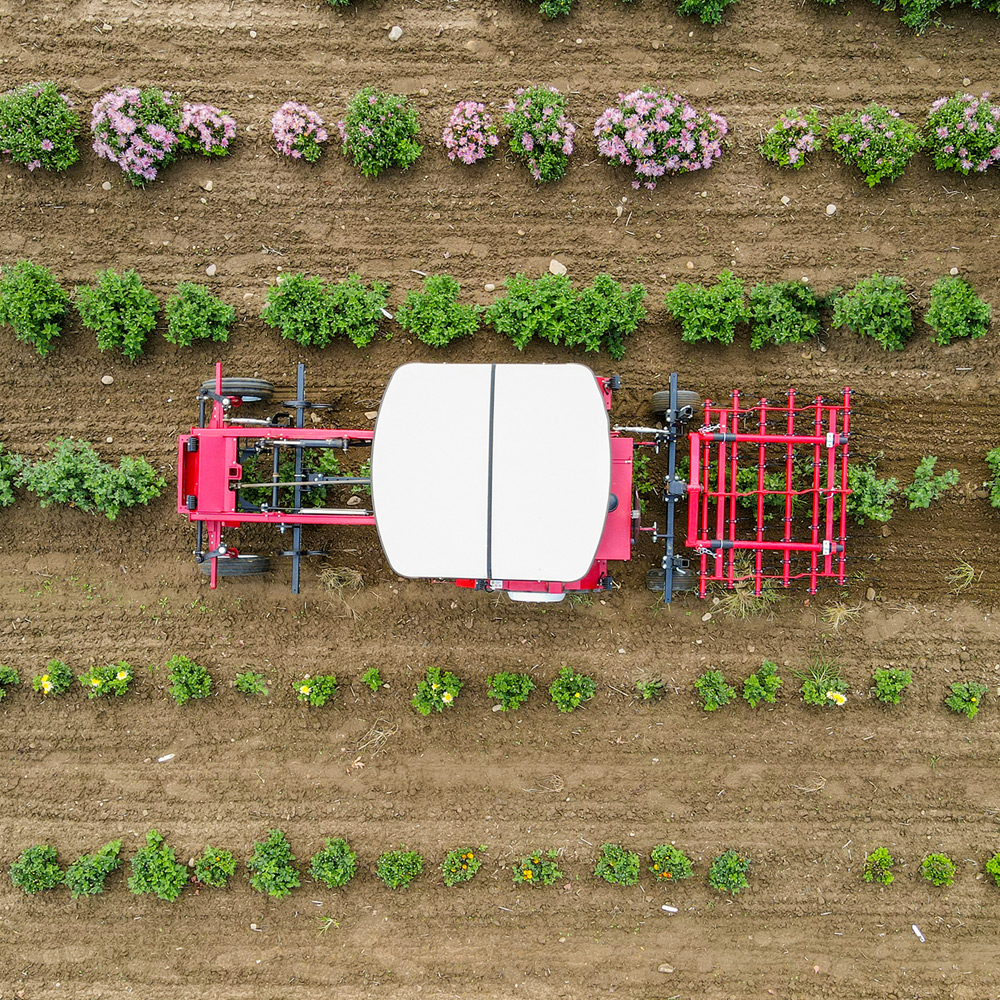
You can maximize flexibility by using a field layout of odd numbers.- 3 Row Example:
- Grow close-row crops (carrots, beets, lettuce) in 3 rows at 15 inches apart
- Grow brassicas, peppers, etc. using the two outside rows, at 30 inches apart
- Grow single wide crops (squash, vines) using the center row
- This means:
- You don't have to continually reconfigure your toolbar
- One cultivation setup serves multiple crops
- You reduce downtime, complexity, and error
4. Start Simple: Learn One Tool Before Adding More
Mechanical weed control has a learning curve. Soil moisture, crop size and even the type of weed can effect cultivation. Starting with one or two main tools can help the transition go smoothly.- Cultivation Tools to Consider
- A Basket Weeder for early-season passes (also can be used for row marking and stale seed-bedding)
- A Finger Weeder A-Blade set-up takes can of between and in row weeds after crop roots are established
- A Tine Weeder for blind cultivation
5. Build Your Weed Control System Step by Step
Mechanical weed control is about timing, preparation and layering strategies as well as equipment. Here are some fundamental things to consider when planning your farm's weed control strategy.- Cultural Controls | Know your weeds, life cycles, and when they are vulnerable
- Seedbed Prep | Use stale seed-bedding to germinate and kill early weeds before planting.
- Blind Cultivation | Tools like tine weeders, and flame weeders eliminate tiny weeds before crops emerge.
- Between-Row Cultivation | Sweeps, knives, and shovels handle spaces between crops.
- In-Row Cultvation | Finger weeders refine the final zone around each crop.
Learn More from the Land Connection's Mechanical Weed Control Field Guide
We hope this is a helpful resource for you as your farm scales. Please contact us or schedule a free consultation to receive guidance for your specific farm.